We recently participated in the Visit North Carolina Travel Conference in beautiful Asheville. One of the sessions for travel professions, and in our case, publications covering travel, was a session on the importance of a good strategy in pubic relations (PR) and an introduction to the Barcelona Principles. Big thanks to J Public Relations and Destinations International for the excellent presentation.
In the realm of PR, the Barcelona Principles have become a gold standard for establishing effective and ethical PR measurement practices. First introduced in 2010 and updated in 2015, these principles have played a pivotal role in advancing the field of PR and providing professionals with a framework for evaluating the success of their campaigns. Despite its comprehensive nature, the Barcelona Principles seem to be missing a crucial step: encouraging clients to link back to online articles after they have been published.
The Barcelona Principles consist of seven guidelines that PR practitioners should follow in order to evaluate the effectiveness of their campaigns. These principles include:
The Barcelona Principles: A Brief Overview
Importance of goal setting and measurement
Measuring communication outcomes, not just outputs
The effect on organizational performance should be measured whenever possible
Measurement and evaluation require both qualitative and quantitative methods
AVEs (Advertising Value Equivalents) are not the value of public relations
Social media should be measured consistently with other media channels
Measurement and evaluation should be transparent, consistent, and valid
These principles have significantly contributed to the development of a more strategic and ethical approach to PR measurement. However, there is one key aspect that needs to be added to this list: the importance of clients linking back to online articles.
The Missing Step: Linking Back to Online Articles
In the digital age, online articles have become a critical component of PR campaigns. By providing valuable information and generating conversations, these articles contribute to brand awareness, reputation management, and audience engagement. Linking back to such articles from your website after they have been published is a simple yet powerful step that can amplify the impact of PR efforts. Social media is great, but search engines need web links to provide great experiences to their users.
Why Linking Back Matters
Enhanced credibility: When clients link back to online articles, it adds credibility to both the content and the brand. This helps to build trust among audiences and enhances the brand’s reputation.
Improved search engine rankings: Linking back to online articles can contribute to better search engine optimization (SEO). This can lead to increased visibility, higher organic search rankings, and ultimately more website traffic.
Audience engagement: Linking back to articles encourages audiences to engage with the content, fostering conversations and sparking interest in the brand or product.
Longevity of content: By linking back to articles, clients ensure that their content remains relevant and accessible over time. This can increase the longevity of PR efforts and allow campaigns to continue generating value long after they have been launched.
Everyone wins. Cost: $0.
Adding the Missing Step to the Barcelona Principles
While the Barcelona Principles have been instrumental in shaping the PR industry, the addition of the missing step—the need for clients to link back to online articles—can further enhance the effectiveness of PR measurement. By emphasizing the importance of linking back, PR professionals can encourage clients to maximize the impact of their campaigns and demonstrate the true value of PR.
In conclusion, the Barcelona Principles have been an invaluable tool for PR professionals. However, incorporating the missing step of explaining the importance and encouraging your clients to link back to online articles will only strengthen the framework and improve the overall efficacy of PR campaigns. It is time for the industry to acknowledge and adopt this crucial aspect of PR measurement to stay relevant in the ever-evolving digital landscape.
I’ve been lucky enough to straddle the world’s move from analog to digital (which makes me old, kids). My data-driven career started in direct mail and then, like the rest of the world, moved to the internet in the ’90s.
And I’ve noticed something important…
We’ve forgotten how to be responsive. And it could be costing you business.
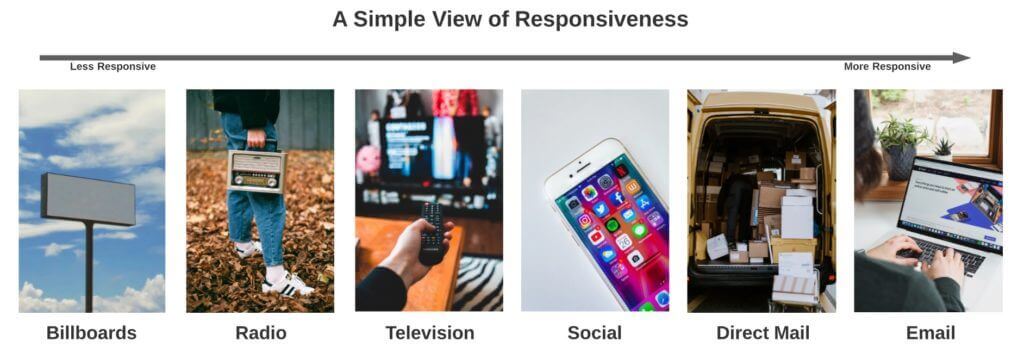
From my experience, our loss of customer responsiveness began with “broadcast” advertising with mediums such as television, radio, newspaper, and magazines. Despite the promises of “1:1” marketing, digital marketing exponentially accelerated with the rise of Google, Facebook, and Amazon’s dominant market positions. In many cases, digital marketing these days is more like old broadcast marketing.
Imagine being a door-to-door salesperson in the 1950s. You knew right away what customers liked and didn’t like. You knew it in real-time. However, if your company advertised on TV, in the newspaper, or on the radio, the company could reach many more people than you could on your route that day. What likely happened is that advertising enhanced your ability to sell. It enhanced that one-to-one relationship. The company didn’t take you off your route just because it was advertising.
Broadcast advertising works as long as you understand the power in the hands of the broadcaster. They own the customer relationship. If you are a large enterprise, then you can perhaps afford to bargain for better advertising rates. For the rest of us, we continued forward, believing that “digital marketing” is how it had to be now. Move all of my advertising from “old school” and buy search keywords (controlled by Google), advertising on Facebook/Instagram (using black-box algorithms), or sell through Amazon (where you often aren’t even legally allowed to use the buyer details for follow-up).
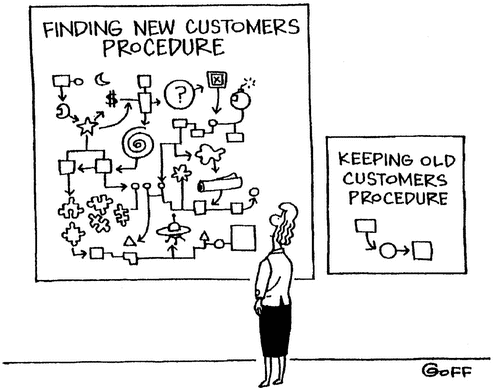
Source: Ted Goff
Now, let’s put that in modern terms. If you depend on advertising via Google, Facebook, and Amazon and you are not developing high-ROI one-to-one customer relationships, you have a problem. Yes, you likely don’t have a door-to-door salesperson. But, you do have other ways to cultivate profitable long-term customer relationships. It is so much easier to keep a current customer than it is to find a new one.
The top solutions that work one-to-one are email marketing and good ole direct mail.
These are two media messages that arrive where your customer is, sent to them specifically, with their name on the message. It is this personalization (you choose the person to whom you promote, and you promote to them personally) that defines a direct relationship. Above all, direct marketing is responsive marketing in that you know what your customers are saying and buying. They become more than a statistic; they become people.
The typical small or medium-sized business, generally under $50M in sales, must learn to work with Google, Facebook, and Amazon (and broadcast media if they can afford it). As long as your marketing achieves well-reasoned key performance metrics, you should absolutely keep advertising with giants such as Google, Facebook, and Amazon. Broadcast and “big” digital advertising absolutely can work. When it does achieve your performance metrics, absolutely keep doing it and optimize every step.
However, it would help if you did not fall prey to the newest-of-the-new bright and shiny solution offered in the digital marketing world. They are generally a waste of effort and a distraction away from success. Learn how to test new channels and techniques before investing heavily in them. Prove that they work (meet YOUR performance metrics) before devoting a significant portion of your budget.
At the same time, businesses must clarify their message and develop direct consumer relationships. Now. This is an absolute imperative.
First, develop your email list. If you are a larger firm, hire a professional communications firm or branding agency with direct marketing experience. Then listen to them. Their experience will help you. For smaller businesses, no matter how small, I suggest looking at Marketing Made Simple from StoryBrand. It is a repeatable framework for developing an email-based sales funnel that will start your journey.
Next, experiment with direct mail. Really, direct mail. You know, the mail that arrives in an actual mailbox. Send it to your best customers and watch the results. It works. And there are great tools out there that make old direct mail a lot like new digital marketing. Heck, start with Mailchimp, which has built-in digitally printed postcards that can work with your email campaigns.
Lester Wunderman, considered by most to be the father of direct marketing, predicted our current predicament way back in 1971:
“Advertising has always been capable of eliciting a response—but only in the nature of a direct marketing dialogue do we find the potential for responsiveness. And if I read our marketing and social revolution accurately, responsiveness is the only road to a technology which will serve people instead of enslaving them.” – Lester Wunderman, 1971
This was before the modern computer and long before the internet was anything at all.
Responsiveness is produced by talking with customers, not at customers. Good communication is how humans are made to work. I would argue that eCommerce isn’t explosively growing because of COVID-19; Ecommerce is explosively growing for all businesses that interact well with their customers and treat them like people. We forget, but this is like mail-order catalogs when they became possible at scale because of computer databases in the ’70s and ’80s.
Something new will come along too, but the successful technologies will be the ones that connect people with people. The best well-run businesses will communicate directly. Just like right now.
The good news is that you can establish excellent direct customer relationships. There is much reason for optimism. Talk to and listen to your customers. Use tools like email and direct mail that allow you to establish and enhance direct relationships. Don’t be beholden to third parties that take away your voice. Your business and your customers will be stronger as a result. Welcome to the next great age of direct marketing.
“The thing that fascinates me is what is yet to come and what is yet to be and what is yet to be made to happen. And I live in that world.” – Lester Wunderman
StyleBlueprint is on a mission: to help 10,000 local businesses by 2025 survive and thrive by using our platforms to support and promote them as critical stakeholders in our communities. If we can help you, we’d love to talk!
After a decade of growing StyleBlueprint.com on WordPress, we have learned to respect, trust, and enthusiastically recommend CloudFlare for DNS management.
The rest of this is going to get technical so this is in in a nutshell: “DNS” stands for Domain Name Service and is the directory for the internet that says what names point to what services. For example, “https://partners.styleblueprint.com” points to our particular web server and no one elses. DNS is VERY important for your business because almost all of your digital marketing, from website, to email, and often even your phone system now depends on DNS to route things correctly.
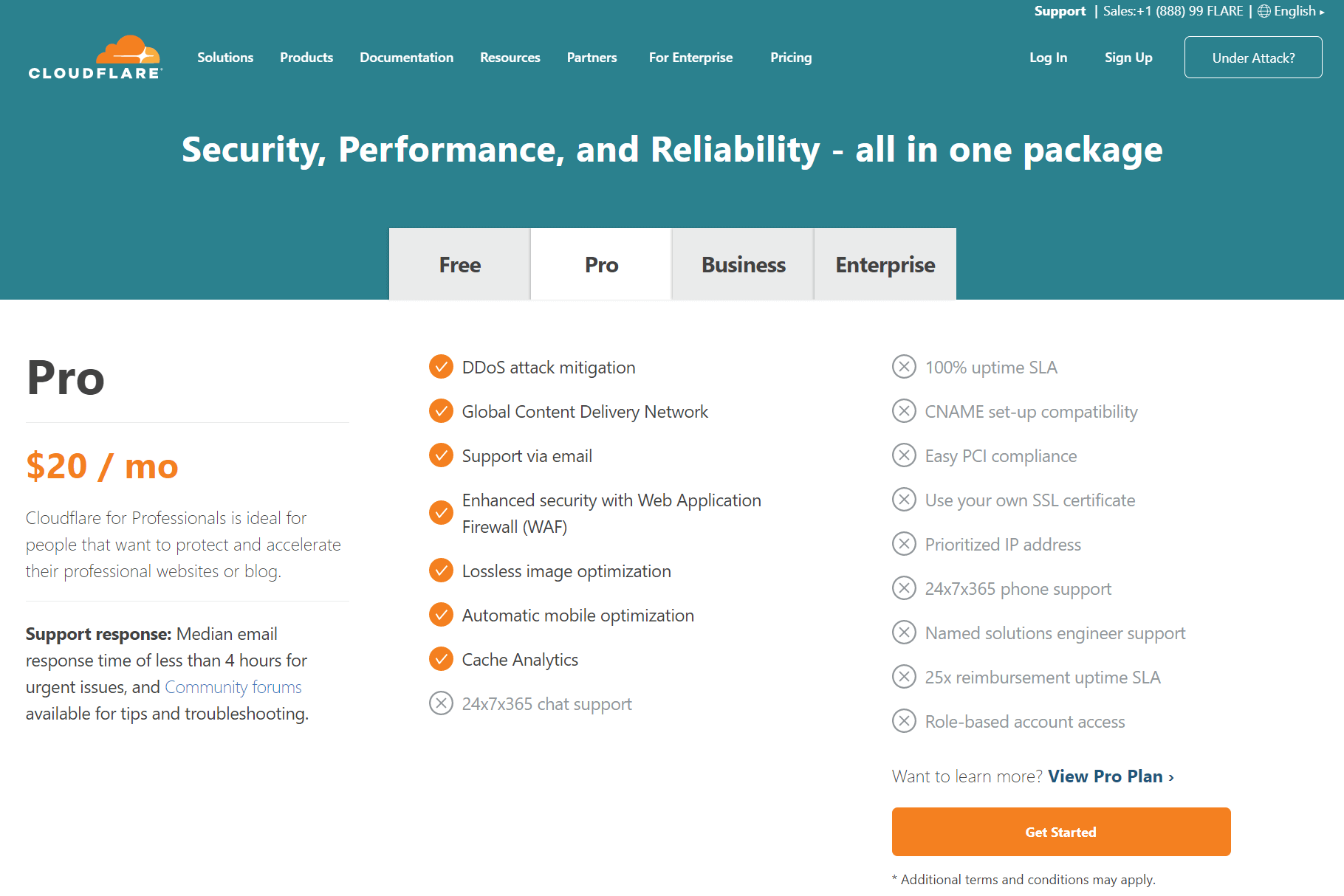
Most internet domain name providers provide only basic DNS services. Cloudflare takes that to a whole new level. Here are highlights:
Cloudflare easily lets you block traffic from regions of the world that are both security threads and very unlikely to bring you business. An easy example would be “North Korea”
Cloudflare is optimized or WordPress security. It helps cut down on many different kinds of threats automatically included illegitimate logins and comment spam.
DNS is vital for your business. With Cloudflare, you can assign user accounts to trusted parties while you keep absolute control of your domain name.
Cloudflare will help speed up your website automatically. Images that can be cached will automatically do so. This makes your website faster for your users and improves your SEO.
For something so technical, it is pretty easy to use too!
The Cloudflare “Pro” package is $20 per month and we highly recommend that all of our clients purchase directly at https://dash.cloudflare.com/sign-up. We can assist with setup if you don’t have internal or external IT support. This gives you peace of mind that your digital presence is completely under your control and lets us provide you even better digital marketing services.